Debating over Dinner: NRCA Students Step into Historical Shoes
By Adella Wu, Shield Editor
Sometimes, history is best learned by eating pie and arguing within a 16th- or 18th-century context. In November at NRCA, advanced placement junior and senior history classes hosted “dinner parties” with guests such as Thomas Jefferson or Henry VIII. Students portrayed roles and hashed out arguments, all within historical context. Debates, wigs, and cheeseballs were the puzzle pieces of a creative educational experience put together by NRCA’s AP US History and AP European History teachers, leaving students with the big picture of both facts and memories they will never forget.
Mr. Todd Gealy dreamed up the assignment in the special collections library at the University of Virginia. When he taught public school, Gealy, AP US History (APUSH) teacher, went to UVA as part of a federal grant to learn from historical documents. In the Thomas Jefferson section of the library, Gealy created characters from Jefferson’s time, such as the Friendly Farmers who supported Jefferson’s Louisiana Purchase, for students to role-play in an APUSH dinner party. Gealy said, “We're taking on characters that represent people in that time period. And it's just a fun way to interact with the history.”
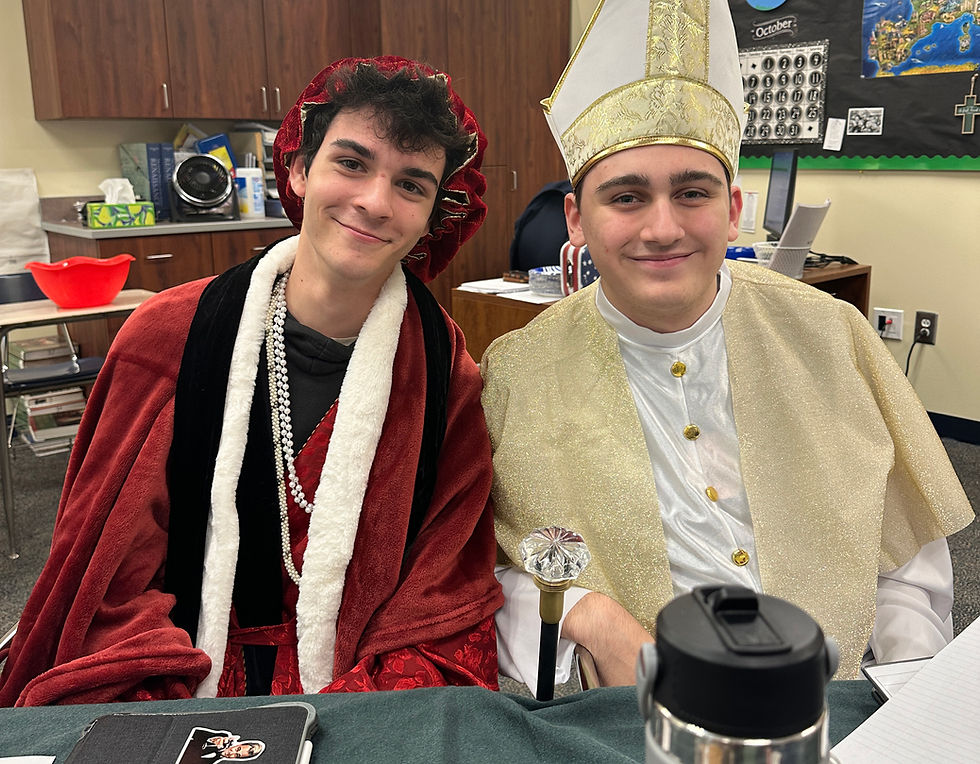
In the senior history curriculum, Mrs. Melissa Bailey, AP European History teacher, incorporated Catholic and Protestant figures from the 16th to 17th centuries in her dinner party. For example, students dressed in crowns to represent Elizabeth I and in pope costumes to portray Pope Leo X. Interacting with characters that lived at different times helped students understand how beliefs and circumstances impacted people’s relationships, even across time periods. Bailey said, “I think it helps them to bring stories together.”
The AP dinner parties connected stories from history to real life in a palatable way. Gealy said, “These issues that they were dealing with in that time period are very similar to some of the issues we're having now.” Religious conflicts, like the Peasant’s War in Europe, and economic stressors, like Jefferson’s Embargo, have been prominent as long as humans have existed, and studying history is how people learn not to repeat mistakes.
Having the historical record and deductive reasoning to interpret what is going on is life-changing. Lily Powers, an APUSH student, said, “It brings a sense of logic in the real-world events because you have to have a lot of logic to back up your position in that dinner party. So it kind of shows how we should be doing it today, how we should be backing up our political positions today with that same logic.”
Shaking things up with food, drinks, and real-life characters from the past helped students absorb content in a more creative and effective way this fall.